Food Ads: Examples of Product Demos, Meal Ideas and Taste Reactions
Real food ads from 2024 to 2026 grouped by format: product demos, meal ideas, taste reactions and offers, with what each shows and when to use it.

· 13 min read
Most lists of food ads examples are really lists of famous TV commercials. Useful for inspiration, harder to turn into next month's paid social brief.
This guide collects real food and beverage ads from 2024 to 2026 and groups them by the job each format does: product demonstrations, meal ideas, taste reactions and offers. Each example names the brand, the channels and what the ad shows, with a link to the source so you can watch it yourself.
P.S. If you want these formats tested against each other across Meta, TikTok and retail media, our food and beverage team builds that testing plan with you.
At 9AM we sort food creative by the question it answers for a shopper. A demo answers "what is it like?" A meal idea answers "when would I eat it?" A taste reaction answers "will I like it?" An offer answers "is it worth the price?" Brands that cover all four, and measure each one separately, learn faster than brands that chase one viral format.
What Makes a Food Ad Work in Paid Media?
A food ad works when the viewer understands the product, the moment to eat it and where to buy it within the first few seconds. That sounds basic, but it is where most short-form food ads lose people.
Research backs early branding. In a System1 and TikTok study of 887 short-form ads, sonic brand assets in the first two seconds lifted brand awareness 191%, and products shown in use lifted it 182%. Creator-led ads drew 39% more attention than traditional ads, while logo overlays reduced awareness lift.
We judge every example below on four points:
Product visible early: the food, pack or pour appears before the viewer can scroll.
One clear question answered: texture, use, taste or value, without trying to do all four.
A buying occasion: breakfast, game day, a weeknight dinner or a craving.
A next step: a retailer, an offer or a reason to look for the product.
Creator-Based Food Ad Examples
Creators are the quickest way to make a food product feel real on screen. One person tasting, cooking or serving it can show texture, portion and reaction in a single shot, and a local creator makes the ad feel like a tip from someone the viewer already follows. The two campaigns below show how we use creators for food and beverage brands at 9AM.
Mogu Mogu: taste tests from local creators
Mogu Mogu needed to introduce its coconut-jelly drink to US shoppers who had never tried it, without the budgets of established beverage brands. We worked with 65+ local micro-influencers on taste tests and reaction videos that showed the drink's texture and flavor, and the campaign reached more than 30 million accounts at a recorded cost below 2 cents per engagement.
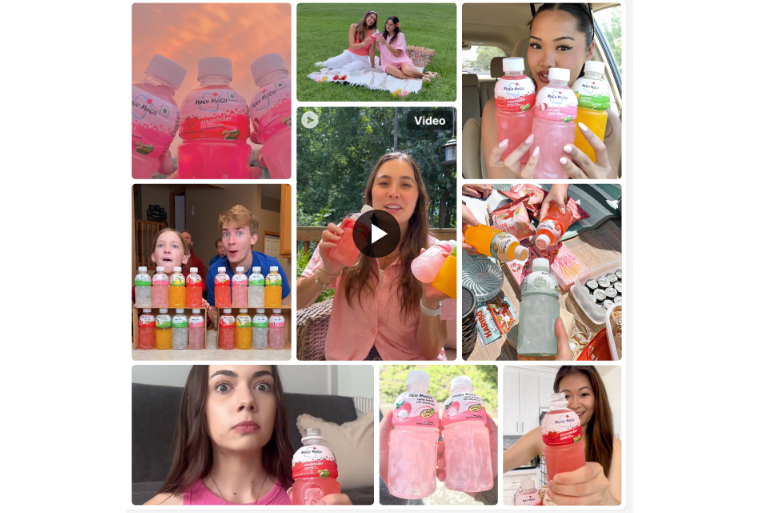
For an unfamiliar product, a real person's first sip answers the shopper's biggest question: will I like it?
HelloFresh: local creators across 17 countries
HelloFresh needed acquisition content that felt local to households in each market. We sourced creators in 17 countries and developed market-specific content for its paid creator program, which supported a wider acquisition effort that brought global cost per acquisition down 20%.
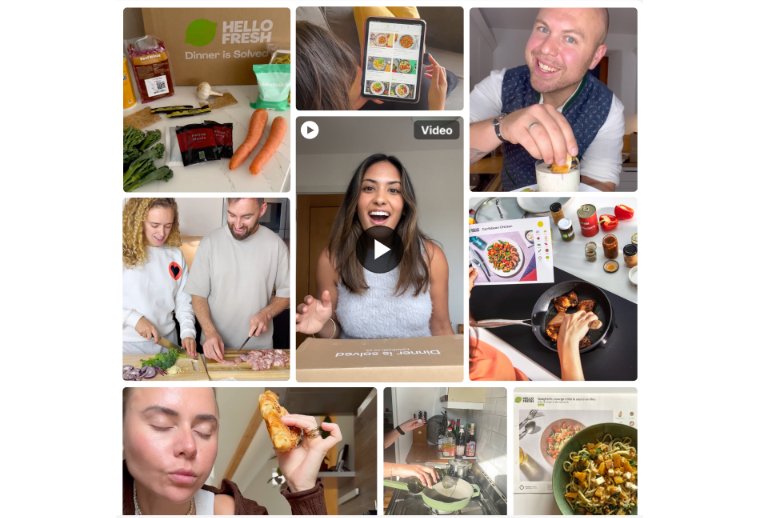
Meal kits sell a weeknight routine, so the people showing it need to look like the households watching. That is the meal-idea format at scale, adapted market by market.
Product Demonstration Food Ad Examples
Product demonstrations show what the food is like before anyone tastes it. They work best for new products, premium price points and textures that look better than they sound.
Texture and Close-Up Demos
Sweet Loren's, "You'll Swear by Them" (2025)
The refrigerated cookie dough brand ran a 30-second film across CTV, paid social and creators built on close-ups of cookies stretching, oozing and melting, followed by people's reactions at the first bite, as LBBOnline reported.
The title works as a pun, too: the reactions spell out curse-word acronyms such as WTF ("What the Flavor") and GTFO ("Get the Fudge Out"), as Nosh noted, so the near-swear turns into a taste claim.
The texture shots carry the product claim, so the ad needs almost no copy.
ALOHA, "Taste That Grows" (2026)
The plant-based protein bar brand used animated close-ups of berries, coconuts and nuts stretching and bursting before revealing the bar, running on CTV, YouTube, podcasts and out-of-home, per ALOHA's announcement. The sensory close-ups turn "real ingredients" from a label claim into something the viewer can see.
Preparation and Cooking-Time Demos
Oscar Mayer, 12-hour smoked bacon (2024)
Oscar Mayer's spots open on thick-cut bacon smoked for 12 hours, cut to what look like lip gloss and razor ads, then return to the bacon, as Adweek described.
The joke dramatizes a process claim: the bacon is smoked for 12 hours, longer than rivals.
Stouffer's, "When the Clock Strikes Dinner" (2024)
In Stouffer's spots, people are hounded by the dreaded "What's for dinner?" until easy-to-prep frozen meals answer it, as Ad Age described. The preparation claim is implied: dinner without planning.
Ingredient and Nutrition Demos
Richmond Veggie Tasty (2026)
The UK meat-free sausage brand turned its ingredients into animated talking vegetables in a TikTok-first campaign, backed by Meta, digital out-of-home and point of sale, per LBBOnline.
Showing familiar vegetables answers the shopper's real question about meat-free products: what is actually in it?
ALOHA's campaign above works the same way, using each ingredient as its own close-up. Both brands keep nutrition and ingredient claims visual, which also keeps the copy short enough for a six-second cut.
Portion and Packaging Demos
Coca-Cola, "Share a Coke" relaunch (2025)
Coca-Cola brought back personalized bottles and cans, added QR-enabled customization, and ran a 45-second video plus an in-person tour where fans personalize cans, as Food Dive reported. The pack is the ad: every bottle on shelf extends the campaign.
Coca-Cola x Marvel (2024)
Limited-edition cans and bottles featured Marvel characters that came to life through augmented reality when scanned, alongside a cinematic commercial, per Coca-Cola's newsroom.
Packaging-led ads give food brands a reason to show the pack up close, which also helps shoppers find it in store.
Meal Idea and Recipe Food Ad Examples
Meal idea ads sell a use for the product. They matter most for ingredients, sauces and staples that shoppers already know but forget to buy.
Recipe Walkthrough Ads
Knorr, "Unlimited Time Menu" (2025)
Knorr taught people to recreate fast-food limited-time items at home with Knorr products, with recipes from Martha Stewart and creators including Joshua Weissman, per Knorr's announcement. The recipe gives viewers a reason to watch to the end, and every step shows the product in use.
Eggland's Best (2025)
The egg brand worked with food reviewers and recipe creators on Instagram, TikTok, Facebook and Pinterest to show its eggs in quick breakfasts, brunches and family recipes, per LBBOnline. For a commodity category, recipes are the difference between "eggs" and "these eggs." Briefing creators well matters here, as we cover in our guide to UGC briefs.
Meal Occasion Ads for Breakfast, Lunchboxes and Game Day
Life cereal, "I really love my life" (2024)
Life revived its picky-eater character Mikey in a musical spot about a hectic family morning, running across streaming, YouTube, TikTok, Meta and Walmart Connect, per Food Dive. The occasion, breakfast on a busy day, does the selling.
Jif, "Save the Celery" (2024)
Jif tackled "celery neglect" on Super Bowl Sunday, pairing discarded celery with peanut butter in a 90-second spot, plus a GoPuff free-jar offer, podcasts, a "Hot Ones" sponsorship and samples in New York sports bars, per Marketing Dive. Jif inserted itself into an occasion it had no obvious place in, which is the hardest version of this format.
Food Pairing and Ingredient-Swap Ads
Pepsi, "Food Deserves Pepsi" (2024 to 2026)
Pepsi's platform positions the drink as the pairing for burgers, pizza and grilled food, from a summer push with Bobby Flay flipping burgers to a holiday spot that swaps Santa's milk and cookies for pizza and Pepsi Zero Sugar, per Ad Age and Marketing Dive. Pairing ads borrow the craving for the food to sell the drink.
Knorr, "#DeliverBetter" (2025)
Knorr set gross food-delivery fails against the same meals made properly at home with Knorr, as Ad Age described.
The swap frames the product against a habit shoppers already want to break. Drinks use the same logic often, as our beverage advertising guide shows.
Taste Reaction Food Ad Examples
Taste reaction ads let another person's face carry the claim. They suit products where the first bite is the selling point and work especially well with creators.
First-Bite Creator Reactions
bibigo, "Dashboard Kitchen" (2024)
The dumpling brand built a fully working in-car kitchen so creators could cook and taste its dumplings in the popular car-food-review format, per bibigo's announcement. The brand built its product into a format creators already use.
Heinz Pickle Ketchup creators (2024)
Heinz's US launch included creators guessing what the new ketchup would pair with, then cooking those dishes, followed by reaction-style videos responding to fans' pre-reviews, per Marketing Dive. If you plan to run creator posts as paid ads, the setup is explained in creator whitelisting.
Blind Taste Test Ads
Pepsi Zero Sugar, Super Bowl (2026)
Pepsi's Super Bowl LX spot, "The Choice," followed a polar bear, a nod to Coca-Cola, through a blind taste test in which he picks Pepsi Zero Sugar over Coke Zero Sugar, per PepsiCo. The format revives the Pepsi Challenge for a zero-sugar product.
Newman's Own, "Good Tastes Better" (2024)
Newman's Own served identical frozen pizza slices with two different descriptions, one about giving profits to children's charities and one about corporate excess, and people rated the purpose-led slice higher, per Newman's Own.
Oatly ran a holiday version of the taste test in 2024, asking 31 professional Santas to compare alternatives to the usual dairy milk and cookies. Comparative taste claims need a properly run test behind them.
Street Sampling and Interview Ads
Heinz, "You Can Already Taste It" (2024)
For the US rollout of Pickle Ketchup, Heinz asked people to imagine and review the product before trying it, a "No Taste, Taste Test," as Adweek reported. Street interviews work when the product idea is easy to react to.
Olipop, "A Can of Do" (2024)
Olipop's Ridge Rush launch included college sneak-peek tastings, a NASCAR car wrap and a recreation of a viral Mountain Dew TikTok with Shannon Sharpe, alongside comedic spots, per Marketing Dive. Sampling gives the brand real reactions to film and a reason for students to post.
Offer and Price-Led Food Ad Examples
Offer-led ads answer the value question. They fit price-sensitive categories and lower-funnel retail campaigns, and they need the same incrementality test as any promotion.
Price and Value-Per-Serving Ads
RC Cola comeback (2025)
Keurig Dr Pepper's first RC Cola ads in 40 years used the line "Not a soft drink. Just a damn good cola," positioning it as an unfussy, affordable soda, per Food Dive. Value can be a brand position as well as a discount.
Molson Coors, "Just Bring the Beer" (2025)
Molson Coors launched "Just Bring the Beer" for the 2025 holiday season across paid social, out-of-home, retail and PR, telling people to forget overpacking and just bring the beer, per Molson Coors. The value is time saved as much as money.
Retailer Offer and Coupon Ads
Liquid Death and Ibotta (2025)
Liquid Death used Ibotta's LiveLift tool to optimize promotions for a new product and reported a 19% incremental sales lift and a 63% shorter purchase cycle, according to Ibotta's case study.
Starry, "100 Degrees, 100% Off" (2025)
When temperatures passed 100 degrees, Starry let people upload a receipt for a 20-ounce bottle and get full cash back through a mobile wallet pass, with temperature-triggered vending machines in three markets, per Food Dive. Tying an offer to a trigger makes it news. For retailer-specific offers, see our guide to Instacart advertising.
Limited-Edition and Seasonal Flavor Ads
Pepsi, "Share a Pepsi" (2025)
Pepsi swapped names for food pairings on limited-edition bottles featuring burgers, tacos, hot dogs, pizza and wings, per The Drum. The limited run gives the brand a reason to advertise a familiar product.
Coffee mate, "Situation-Sip" (2026)
Reality star Carl Radke "hard-launched" a seasonal romance with Situation-Sip, a limited-edition mixed fruit creamer, promoted through free online product drops, per Coffee mate's announcement. Limited editions give creators and social teams a short, natural story arc.
Famous Food Commercials That Still Shape Food Ads
These five food commercials are older, but each one left an idea that today's food ads still borrow.
Snickers: You're Not You When You're Hungry
Snickers launched the platform during the 2010 Super Bowl with a spot starring Betty White, created by BBDO New York, according to The Drum. The lesson: own a need state (hunger) and every execution can reuse it.
Burger King: Moldy Whopper
In 2020, Burger King showed a Whopper rotting over 34 days to promote "the beauty of no artificial preservatives," as Adweek covered. The lesson: a visual proof can make an ingredient claim memorable.
Coca-Cola: Share a Coke
Share a Coke started in Australia in 2011 by printing popular names on bottles, according to Marketing Mag, and returned in 2025. The lesson: packaging can be the media plan.
Chipotle: Back to the Start
Chipotle's 2011 stop-motion film about a farmer, set to Willie Nelson covering Coldplay, won the top TV prize at Cannes in 2012. The lesson: a sourcing story can carry a long-form ad.
Oatly: Wow No Cow
Oatly ran its CEO singing "Wow No Cow" in an oat field during the 2021 Super Bowl, a spot first made in Sweden, according to Ad Age. The lesson: a low-budget, odd ad can win attention in the most expensive slot.
Which Food Ad Format Fits Each Campaign Goal
Each format answers a different shopper question, so the right choice depends on the goal of the campaign and where the product sells, a split we explain in food ecommerce ads.
Format | Shopper question | Best funnel stage | Strong channels | Metric to watch |
|---|---|---|---|---|
Product demo | What is it like? | Awareness, new product launch | CTV, YouTube, TikTok | Thumb-stop rate, brand lift |
Meal idea or recipe | When would I eat it? | Consideration | Meta, Pinterest, YouTube, creators | Saves, recipe page visits |
Taste reaction | Will I like it? | Consideration to trial | TikTok, creator whitelisting | Hold rate, cost per add-to-cart |
Offer or price | Is it worth it? | Conversion | Retail media, coupon apps, paid social | Incremental sales, cost per redemption |
How to Make Food Ads Step by Step
Make food ads by starting from the shopper's question, picking the format that answers it, and testing formats against each other. The six steps below fit most CPG food brands.
1. Pick the Buying Occasion and the Shopper's Question
Name the moment, such as a weeknight dinner, game day or the afternoon slump, and the question a shopper has at that moment. Stouffer's built a whole campaign on a single question: what's for dinner?
2. Choose the Format That Answers That Question
Use the table above. A new texture calls for a demo, a staple calls for a recipe, an unusual flavor calls for a taste reaction, and a price-sensitive category calls for an offer.
3. Show the Product in the First Two Seconds
Put the food, pack or pour on screen immediately, ideally in use. The System1 and TikTok study found products shown in context beat logo overlays for brand awareness.
4. Name Where to Buy and What It Costs
Close with the retailer and, where it helps, the price or offer. Jif routed viewers to a GoPuff free jar; Starry linked the offer to a receipt upload.
5. Test Two or Three Formats Against the Same Audience
Run a demo, a meal idea and a taste reaction to the same audience with the same budget, then refresh the winner before it fatigues. Our guide to creative refresh covers how often to rotate.
6. Read Results by Format and Retailer
Compare formats on the metric that matches their job, then check sales by retailer. A format that drives saves on Meta may not drive Instacart sales, so judge each one where its sales land.
Where to Find Food Ad Examples for Your Own Research
Four free sources show live and recent food ads:
Meta Ad Library: every active ad on Facebook and Instagram, searchable by brand.
TikTok Creative Center: top-performing ads by industry and region, including food and beverage.
iSpot.tv: a searchable archive of US TV commercials by brand and category.
Ads of the World: award and agency work, useful for bigger creative ideas.
Save examples into the four format groups above so your team builds a swipe file that maps to briefs.
Plan Your Next Food Ad Test with 9AM
The strongest food brands treat these formats as a system: demos to introduce, meal ideas to remind, taste reactions to convince and offers to close. Each one gets its own metric, and budget follows what sells.
Pick one product and brief one ad in each format for your next test cycle.
If you need a hand, we plan and buy paid social and retail media for food brands, with every format measured on sales by retailer.
Book a strategy call today so we can grow your brand with food ads that convert.
Frequently Asked Questions
What makes a food advertisement effective?
Early branding, a clear product shot and one question answered. In a System1 and TikTok study, brand cues in the first two seconds and products shown in use lifted brand awareness the most, while logo overlays reduced it.
Which platform works best for food ads?
TikTok and creator content for taste reactions, Meta and Pinterest for recipes, and retail media for offers close to purchase. Our comparison of TikTok and Meta ads covers the trade-offs.
How long should a food video ad be?
Short-form food ads usually run 6 to 15 seconds, with the product visible in the first two. Longer formats, like Jif's 90-second spot, work as hero films that get cut down for paid social.
Do food ads need real food in the shot?
Showing the real product is the safest choice, since the ad must not misrepresent how the food looks or what it contains. Styling and lighting are normal; swapping in a different product is not.
About Corentin Grisoni
Corentin Grisoni helps DTC and wellness brands turn paid media into a connected growth system. As Retail Media Lead at inBeat Agency, he works across Amazon, Meta, TikTok, and Google to build omnichannel campaigns that are measurable, scalable, and tied to business outcomes.
His work brings together retail media strategy, paid social and search, attribution modeling, UGC, and performance creative. He focuses on helping retail, technology, and wellness brands understand where their media budget is working and create a system that compounds what performs.
More from Corentin Grisoni